 |
|
| 榊原~伊勢神宮~安楽島~二見の賓日館
Sakakibara~Ise Jingu~Arashima~Hinjitukan (Photos taken on Feb. 3 & 4, 2007) |
| 2007年2月2日~3日に三重県へ1泊2日の旅行をしました。 We made a overnight trip to Mie Prefecture on February 2 and 3, 2007. 榊原観音、伊勢神宮へ行き、ホテルに着き、テレビを見ていると、2月4日~3月3日まで 伊勢市二見町で「おひなさまめぐり in 二見」が催されると放映。ホテルをチェックアウトし 前日でしたが、二見へ立ち寄りました。 国道42号沿いにある音無山駐車場(無料)に 駐車し、200m程歩いて、賓日館(ひんじつかん)へ到着。 We went first to "Sakakibara Kannon" temple (or "Houshusan Dai-Kannonji" temple) at Isshi-gun, Mie Prefecture and then "Naiku (Kotaijingu)" of Grand Shrine of Ise at Ise City. After visiting the above, we arrived at a hotel "Altia Toba". When watching television, I noticed telecaste on an event, "Doll Festival in Futami" held for a period of February 4 through March 3, 2007 at Futami-Cho, Ise City. Althoug the event was not open to public on February 3, we stopped over Futami-cho. after checking out of the hotel on the day. We parked at Otonashiyama parking lot (free of charge) along Route 42 and walked by about 200m to Hinjitukan Museum. 三重県有形文化財になっている賓日館では「おひなさまめぐり in 二見」に合わせ、当日、 お雛様が展示されていたので入館しました【注1参照】。 各部屋に江戸時代から昭和の お雛様が展示されていて壮観でした【注2参照】。 2階の大広間では池坊のお花の展示 の準備がされていました【注3参照】。 1階と2階の各部屋には、お雛様が展示されて いましたが、さすがに「御殿の間」にはお雛様は展示されていませんでした【注4参照】。 お雛様の展示とは別に、資料室<二見浦の町の歴史や皇族の訪問の様子が写真などで 説明>や御蔵を利用した中村左洲資料室<中村左洲(さしゅう)は二見町が生んだ日本 画家で彼の作品が展示>も十分見ごたえがあります。 入館料は300円で火曜日以外は開館。 Hinjitukan Museum is designated at tangible cultural properties of Mie Prefecture. Hina dolls were exhibited for the public at the museum before the event ,"Doll Festival in Futami". So, we entered there. 【See Note 1】 The sight were spectacular, where hina dolls from Edo era (1603-1867) to Showa era (1926-1989) were exhibied respectively at each room. 【See Note 2】 Ikenobo school, one of flower-arrangement schools, prepared exhibits to be opened for the public at a large hall of the 2nd floor. 【See Note 3】 Hina dolls were exhibited at rooms of both at 1st and 2nd floor, but as might be expected, they were not at "Goten-no-Ma" (Emperor room).【See Note 4】 Aside from the exhibition of the hina dolls, material room <History of Futamigaura area and situation of visit of imperial family were explained with photos and so on.> and Nakamura-Sashu Relic Room using a warehouse (Works of Mr. Sashu Nakamura were exhibited. He was born in Futami-cho and was a Japanese-style painter.> were also interesting to watch. Hinjitukan Museum charges 300 yen for adults and is open except for Tuesday. 旅館やみやげもの店等でも、お雛様が展示されていました。 1000体の雛人形が展示 されることになっている二見生涯学習センターでは玄関正面のお雛様のみが展示されて いました <写真参照>。奥の部屋などは鍵がかけられ入ることは出来ませんでした。 Hina dolls were exhibited at Japanese inns and souvenir shops. 1000 hina dolls were expected to be exhibited at Futami Lifetime Learning Center. This day was one day earlier than the event day, and only two sets of hina dolls were exhibited in front of the entrance. <See photo below.> Rooms except for the entrance were locked. 二見の旅館街は静かで昔にタイムスリップしたような雰囲気があります。去年は旅館街 の道路がタイル張りではなかったが、今年は艶の有る綺麗なタイル張りになっていました。 Street lined with Japanese inns in Futami was quiet and had atmosphere as if we slipped back to old days. The street was tiled although it was not tiled last year. ウェブ作者の地元である瀬戸市では、「第6回 陶のまち 瀬戸のお雛めぐり」が2月2日 ~3月4日まで催されます。 In Seto City, my hometown, "The 6th Moving around Seto City to see Hina Dolls in Girls' Festival season" is being held during a time of February 2 through March 4, 2007. 雛祭の季節には日本各地で「おひなさまめぐり」のようなイベントが繰り広げられます。 Many events like "Visiting to see Hina Dolls" are held all over Japan. In Girls' Festival season, 旅程等は次の通り。 Itinerary is as follows: <1日目> 三重県一志郡白山町の榊原観音(大観音寺)~伊勢市の伊勢神宮(内宮)~ 鳥羽市安楽島のホテル「アルティア鳥羽」 (宿泊) <アクセスルート> 瀬戸市 → 東名阪自動車道(大森→名古屋西→亀山) → 伊勢自動車道 (津) → 榊原観音 → 伊勢自動車道(久居→伊勢) →国道23号 → 「伊勢市浦田市営駐車場」 → 「おはらい町通り」 → 伊勢神宮 → 国道23号 → 「伊勢・二見・鳥羽スカイライン」 → 国道42号 → 「アルティア鳥羽」 <1st day> "Sakakibara Kannon" temple (or "Houshusan Dai-Kannonji" temple at Ichishi-gun, Mie Prefecture)~"Naiku (Kotaijingu)" of Grand Shrine of Ise at Ise City ~ Hotel "Altia Toba" at Arashima island in Toba City <Access Route> Seto City → Higashi-Meihan freeway (Ohmori → Nagoya-nishi →Kameyama) → Ise freeway (Tsu) → "Sakakibara Kannon" temple → Ise freeway (Hisai → Ise) → Route 23 → "Ise City Municipal Urata" parking lot (free of charge) → "Oharai-cho Doori", community road as well as strolling road for touris → "Naiku (Kotaijingu)" of Grand Shrine of Ise → Route 23 → "Ise - Futami - Toba Skyline" expressway → Route 42 → Hotel "Altia Toba" <2日目> 伊勢市二見町の賓日館(ひんじつかん);→「おひなさまめぐり in 二見」イベントより早く お雛様が公開展示されていた【注3参照】 <アクセスルート> 「アルティア鳥羽」→ 国道42号 → 二見町 → 音無山駐車場 → 賓日館 → 二見旅館街 → 音無山駐車場 → 国道42号 → 国道23号 → 伊勢自動車道(伊勢→亀山) → 東名阪自動車道(亀山→名古屋西→大森) → 瀬戸市 <2nd day> Hinjitukan Museum at Futami-Cho, Ise City → Hina dolls were exhibited for public earlier than in "Doll Festival in Futami". 【See Note 3】 <Access Route> Hotel "Altia Toba" → Route 42 → Futami-cho → Otonashiyama parking lot (free of charge) → "Hinjitsukan" museum → "Futami" Japanese inn alley → Otonashiyama parking lot → Route 42 → Route 23 → Ise freeway (Ise → Kameyama) → Higashi-Meihan freeway (Kameyama → Nagoya-nishi →Ohmori) → Seto City 【注1】賓日館の歴史 「二見浦・賓日館の会」作成のパンフレット「賓日館」の説明の一部を基に ウェブ作者が以下に概要を記しました。 賓日館は休憩・宿泊施設として明治20年(1887年)、建設され、明治44年 (1911年)に隣接する二見館(三重県初の政府登録国際観光ホテル)に 払い下げられ、二見館別館として平成11年まで貴人の宿泊所とされてきた、 由緒有る施設です。 二見館休業後、平成15年に二見町に寄贈。 平成16年に三重県有形文化財に指定。 【Note 1】History of Hinjitukan Museum Based on a part of explanation of pamphlet "Hinjitukan" made by "Meet of Futamigaura/Hinjitukan" this web author wrote down a summary below. Hinjitukan has been buil as a rest facility /accommodations in 1887, has been granted to Futamikan (Mie Prefecture's first government registration International Tourist Hotel) which was adjacent to Hinjitukan in 1911. Hinjitukan is historic building which was used as a lodging of a noble in the name of "Futamikan-Bekkan" (Futamikan Annex) until 1999. After Futamikan was closed, Hinjitukan was donated to Futami-cho in 2003 and is designated as a tangible cultural property of Mie Prefecture in 2004. 【注2】賓日館のお雛様 「おひなさまめぐり in 二見実行委員会」、「NPO法人二見浦・賓日館の会」作成の パンフレット 「おひなさまめぐり in 二見」の賓日館の個所に次のように説明されています。 賓日館では、太江寺所蔵の江戸時代の雛人形や神宮の神木のお雛様、バロック真珠 によるお雛様、大正時代、昭和初期、昭和20年代などの段飾りなどが展示されます。 【Note 2】 Hina dolls of Hinjitukan The pamphlet made by " Executive Committee on Visiting to see Hina Dolls in Futami" and "Meet of NPO organization Futamigaura/Hinjitukan" says: Hina dolls in Edo era (1603-1867) collected by Taiko temple, those made by sacred tree of shrine, those decorated with baroque pearl, those in Taisho era (1912-1926), early period of Showa era (1926-1989) and the 1980s were displayed at tiered stands. 【注3】賓日館の大広間舞台 <出所: 説明板の一部。 「・・・」は文章省略> この舞台の下には・・・6つの大きな甕が据えられています。これには必要な音だけを反響 させる効果があります。 また、床板にはヒノキ、天井板には反響した音が柔らか味を増す ように桐が使われています。舞台背景に描かれているのは、郷土の日本画家・中村左洲 の手になる「老松」(昭和10年<1935年>作)で、畳に座った時の目線では舞台から 浮き出して見えます。 【Note 3】 The grand hall stage of Hinjitsukan <source : A part of an explanation board. In the place marked "...", sentence is omitted.> Six big pots is laid under this stage. The pots has effect to echo only necessary sound. Hinok (or Japanese cypress) is used for the floor, and paulownia for the ceiling board so that echoed sound may add soft feeling. Japanese-style painting, "old pine-tree" drawn in 1935 by the local painter, Mr. Sashu Nakamura, is put on a stage background. The painting seems to float from the stage when looking at it in eye line . 【注4】御殿の間 <出所: 説明板の一部。 「・・・」は文章省略> 御殿の間は明治20年(1887年)賓日館創建当時からその構造は変わっていません。 本間天井は珍しい二重格天井になっています。・・・格子を二重にしたのは、皇室を迎える に当たり格式を重んじる格天井により一層の格式を持たせることを意図したものです。・・・ 広縁の天井は比較的脂分の少ない屋久杉で、広縁奥の化粧室の天井は寄せ木造りです。 【Note 4】 "Goten-no-Ma" (Emperor room) <source : A part of an explanation board. In the place marked "...", sentence is omitted.> The structure pf the Emperor room does not change froma the foundation of Hinjitsukan in 1887. Honken ceiling (Honken means length of 1.82m.) is a rare double-grate lattice ceiling (called "Goutenjo"). ・・・The double-grate lattice ceiling is used to show more prestige in receiving the Imperial Family.・・・ The ceiling at a veranda is made by Yaku cedar with a little fat, and the ceiling of a powder room at the back of the veranda is made by a method of "Yosegidukuri" construction (a method to construct a statue by assembling pieces of wood). 【注5】二見浦 昭和30年代は愛知県の小学校の修学旅行(伊勢・鳥羽方面)での宿泊先は二見浦でした。 現在は大学などのサークル活動での宿泊先として利用されることが多いようです。 二見浦の旅館のほとんどは伊勢神宮に参拝する人達の宿泊や休憩先として明治時代 に建設されました。 【Note 5】 Futamigaura The accommodations in school excursion (for Ise/Toba area) of an elementary school of Aichi Prefecture were Japanese inns in Futamigaura in 1950's (Showa 30's). The Japanese inns seem to be used as accommodation for circle activity of universities and so on now. Almost all the Japanese inns in Futamigaura were constructed in Meiji era ((1868-1912) for lodging and break of people who are going to worship Ise-jingu Grand Shrine. |
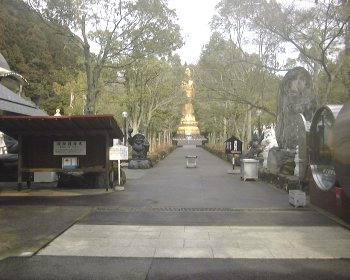
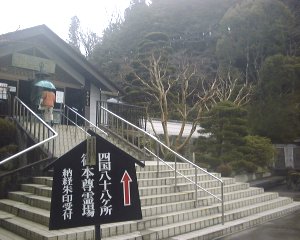
| 榊原観音(大観音寺) 左: 参道正面 <33mの高さの純金大観音が奥に見える> 右: 純金大観音の左にある四国八十八箇所ご本尊霊場 "Sakakibara Kannon" temple (or "Houshusan Dai-Kannonji" temple) Left: Front approach <The 33-metert-tall solid gold statue of the Goddess of Kannon is seen at the back.> Right: The holy site ,where principal images in "Shikoku-88-sacred places" are worshipped, is at left side of the "Sakakibara Kannon" . |
|
 |
 |
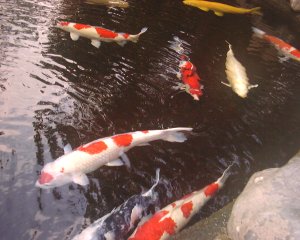
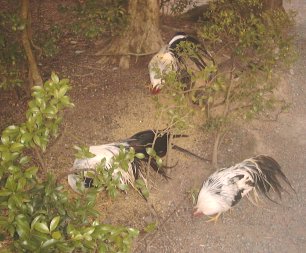
| 伊勢神宮(内宮) <左: 池の鯉 右: 尾長鶏> "Naiku (Kotaijingu)" of Grand Shrine of Ise <Left: Carp in the pond, Right: Long tail chicken> |
|
 |
 |
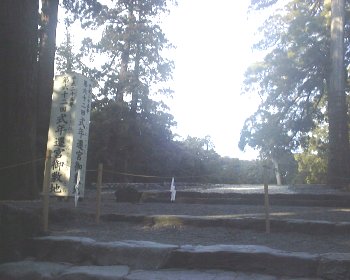
内宮の平成25年第62回式年遷宮敷地 |
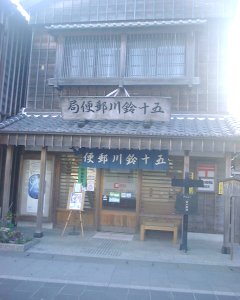
「おはらい町通りの五十鈴川郵便局 Isuzugawa post office at "Oharai-cho Doori" street |
 |
 |
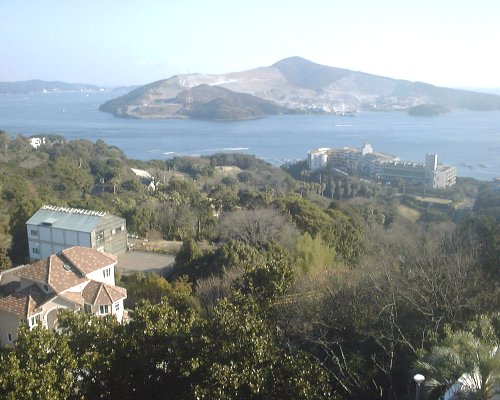
| ホテル「アルティア鳥羽」4階レストラン<朝食会場>から窓越しに北を見る <写真右から太陽が上ってきたので、正面が北> View of north through window at the restaurant of 4th floor in the hotel "Altia Toba" <Front is north since sun rose from right hand side of the photo> |
 |
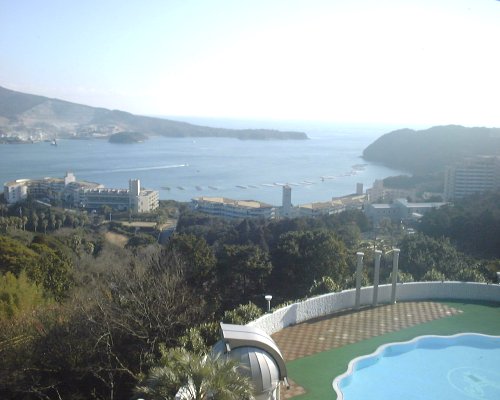
| ホテル「アルティア鳥羽」4階レストランから窓越しに東を見る <牡蠣養殖のいかだが写真中央に見える> View of east through window at the restaurant of 4th floor in the hotel "Altia Toba" <Flotages of oyster culture are seen in the center of photograph.> |
 |
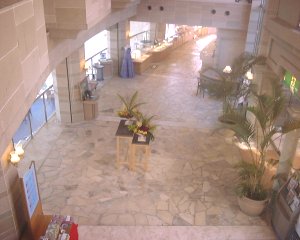
| 4階から3階ホールを見下ろす Looking down of the third floor hall at the fourth floor |
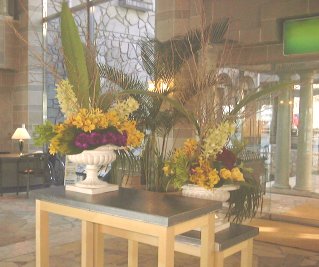
3階ホールの花 Flowers of the third floor hall |
 |
 |
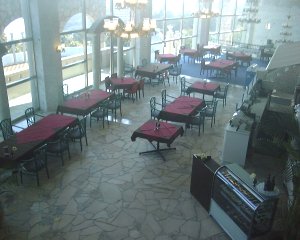
| 3階ホールから2階レストラン<フランス料理はここで食べる>を見下ろす Looking down of the second floor restaurant at the third floor hall |
 |
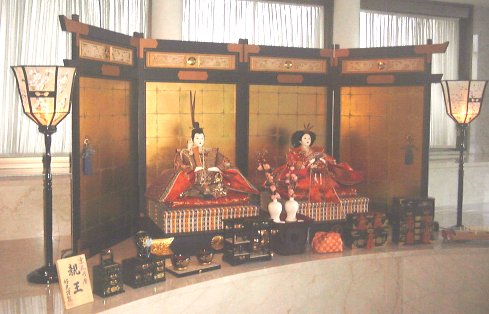
| 2階レストランの階段を3階へ上がった所に飾ってあるお雛様 Hina dolls displayed at the place that we went up stairs of the second floor restaurant to the third floor |
 |
| 口取り(近海鮮魚のカルパッチョ) <この後、前菜(ホタテ3種)、きのこのスープが出されましたが、写真省略> Assorted refreshments (carpaccio of shore fresh fish) <After it, hors d'oeuvres (three kinds of scallops), soup with mushroom were served, but photos are omitted.> |
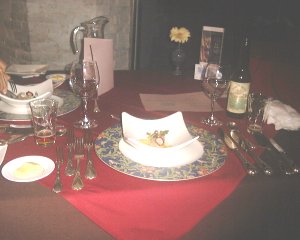 |
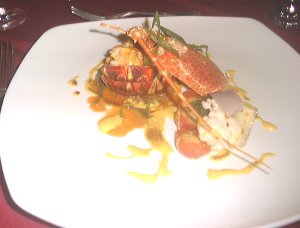
| 魚料理(伊勢海老一匹まるごと) Fish dishes (whole lobster) |
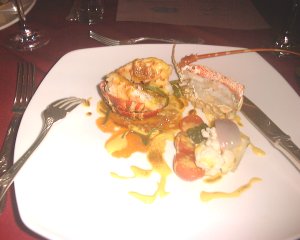
左の伊勢海老をひっくり返した状態 The left lobster is upset |
 |
 |
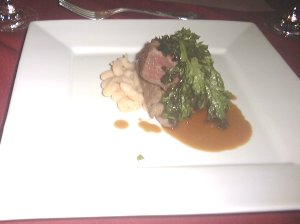
| 肉料理(牛ヒレ肉のグリエ) Meat dishes(griller of a mignon) |
デザート(向こう側はヨーグルトソース; 手前はキャラメルソース) Dessert (the other side, yogurt source; This side caramel sauce) |
 |
 |
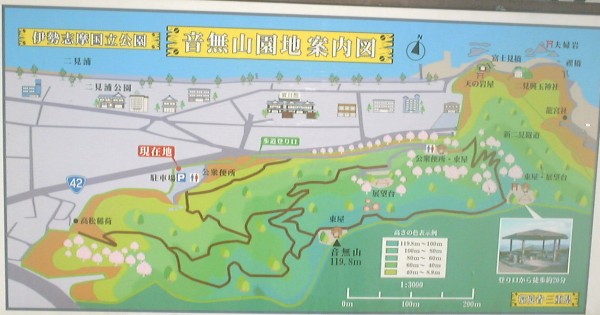
| 音無山駐車場にある案内図 <「現在地」としてある駐車場から約200mで賓日館> Guide map in Otonashiyama parking lot <It is about 200m from "present location" marked red to the Hinjitukan Museum.> |
 |
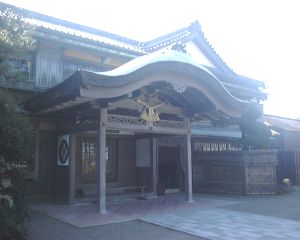
| 賓日館正面 .Front of Hinjitukan Museum |
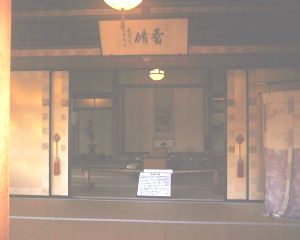
賓日館2階の御殿の間 "Goten-no-Ma" (Emperor room) at the 2nd floor of Hinjitukan Museum |
 |
 |
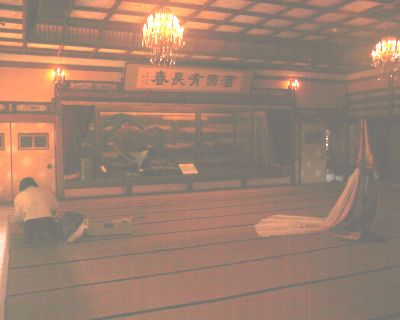
| 大広間 (120畳) <背景「老松」が舞台に見える;また、琴が準備されている> Grand hall with 120-mat in Hinjitukan Museum <A background "old pine-tree" is seen on a stage; Koto (or Japanese harp) is prepared> |
 |
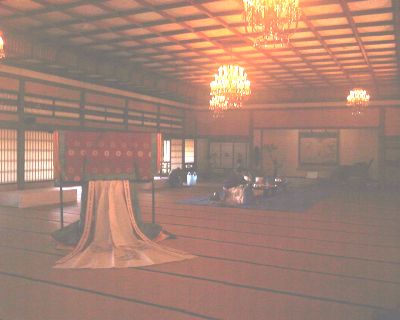
| 大広間 (120畳) <上の写真と反対側から見る。池坊のお花の展示の準備中> Grand hall with 120-mat in Hinjitukan Museum <Looking from the other side of the above photo. Ikenobo school was preparing exhibits of flower-arrangement> |
 |
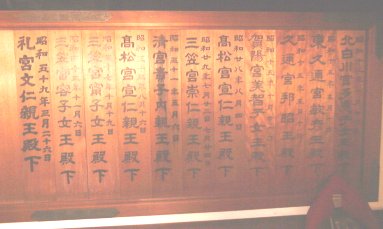
| 賓日館に訪問された天皇・皇后等皇族の新しい名簿 <2階の「翁の間」の北側の壁に張ってある> New lists of the royalty such as the Emperors/the empress who visited Hinjitukan <It is attached on a northern wall of "senior room" at the second floor> |
 |
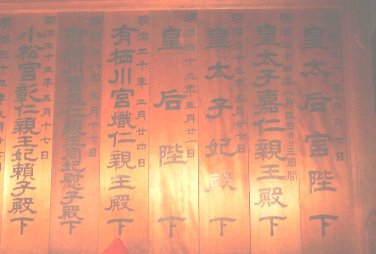
| 賓日館に訪問された天皇・皇后等皇族の古い名簿の一部 <2階の「翁の間」の西側の壁に張ってある> Parts of an old list of the royalty such as the Emperors/the empress who visited Hinjitukan <It is attached on a western wall of "senior room" at the second floor> |
 |
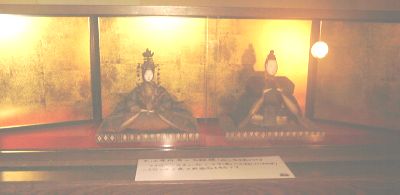
| 江戸時代の雛人形 Hina dolls in the Edo era (1603-1867) |
 |
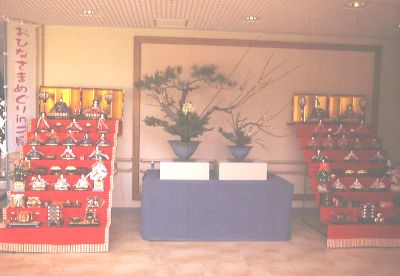
| 二見生涯学習センター玄関正面のお雛様 Hina dolls exhibited in front of the entrance in Futami Lifetime Learning Center |
 |