|
|
| 織部瓦と狛犬 - 深川神社修復竣工記念 Oribe Roofing Tile and Guardian Dog Commemorating Completion of Repair of Fukagawa Shrine (Photos taken on Dec. 7, 2002) |
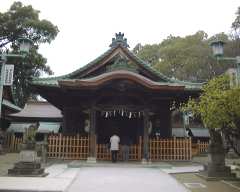
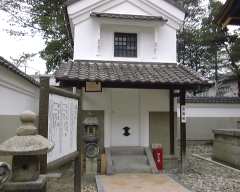
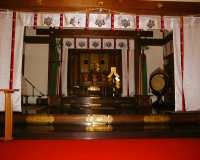
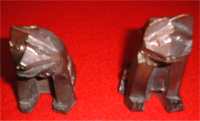
| 深川神社の2年間に及んだ修復事業の竣工を記念して、加藤藤四朗作と伝えられている 重要文化財の狛犬が、2002年12月5、6 7日、深川神社宝物殿(写真参照)で無料公開 されました。最終日の12月7日には陶芸家の加藤清之氏による「織部瓦と狛犬」と題して、 特別講話が深川神社神楽殿(写真参照;拝殿に向かって左にあります)でありました。 In commemoration of completion of the reparing work of Fukagawa Shrine for two years, the guardian dog of the important cultural property which is said to be made by Mr Toshiro Kato, was shown to public freely inside the shrine treasure house (See photo) on December 5, 6 and 7, 2002. On December 7 of the final day, special lecture on a title, "Oribe roofing- tile and guardian dogs" was given by Mr. Kiyoyuki Kato, ceramic artist at kagura-den (sacred music and dance room) (See photo ;located in the left toward front shrine) 織部瓦と狛犬は余り直接的には関係がないようですが、どちらも陶器であり、深川神社に あるという事では大いに関連があるようです。 It seems that there is no direct relation between Oribe roofing-tile and guardian dogs, but the both are made of pottery and exist in Fukagawa Shrine, which shows some relation. 以下に加藤清之氏の講和を要約します:(一部聞き取りミスがあるかもしれません) 織部瓦は織部の緑釉で1200℃以上の高温で酸化焼成された瓦です。瀬戸で最古の 織部瓦は水野地区(穴田)の窯から発掘されたもので、1650年前後に焼かれたものと 推定されている。定光寺焼香殿の床に敷いてある敷瓦【ウェブ作成者による備考】も この穴田の窯で焼かれた。 名古屋城二の丸庭園でも同じ瓦(葉をモチーフとした)が発掘された。更に、加藤春岱の 屋敷跡からも同じ瓦が発掘された。 明治から大正時代に建築された徳川美術館の旧本館の屋根は全て織部瓦で葺かれている。 【ウェブ作成者による備考】 この敷瓦は焼かれた年代から「本業敷瓦」であり、本業タイルの原形というべき。 本業タイルの源流と江戸末期の敷瓦及び本業タイルの写真はseto_scnry15(1/2)参照。 説明はseto_scnry15(2/2)の注7と8参照 His lecture is summarized as follows: (There may be a listening comprehension mistake in part.) Oribe roofing-tile is made by firing a china clay with Oribe green glaze in oxidization at high temperature of more than 1200℃. The oldest Oribe tile existing in Seto was unearthed from the kiln at Mizuno area (Anada), and is presumed to be what was fired around 1650. Shiki-gawara (roofing-tile laid on the floor) of Shoukouden (Incense-burning hall) at Jyoukouji Temple was fired at the kiln at Anada. The same tile (the leaf was used as the motif) was unearthed also from the garden at Nino-maru (2nd important zone in a castle) in Nagoya Castle. The same tile was also unearthed from the remains of Mr. Shuntai Kato 's residence. All the roofs of the old main building of the Tokugawa Art Museum built for the period from Meiji to Taisho Era (1868 - 1925) are tiled with Oribe roofing-tile. 瓦は平瓦だけだと約5000枚、鬼瓦とか化粧瓦等を含めると4000枚~5000枚を一度に 窯で焼くことになり、焼きが失敗すると、家族が路頭に迷うことになり、失敗は許されない。 この為、加藤清之氏は昭和25年瀬戸窯業高校卒業されても、親の仕事(瓦製造)を継がずに 絵を画く事や、陶芸作品を作りたかったが、20代前半に父親が鬼瓦(大・小)を作るのを 真似て、瓦を作るようになった。平瓦と違い、鬼瓦は作るのが難しく、職人さんに任せず, 自分か父親が作った。 Fired are in a kiln at a time about 5000 in terms of only plain roofing-tile and 4000 - 5000 when ridge end tile or dressed-roofing-tile is included. If the firing fails, his family loses its means of livelihood. So, failure is not allowed. Even if graduating from Seto Ceramic High School in 1950, he did not take over his father's business (manufacture of roofing-tile) because he wanted to draw a picture or make works of ceramic art. He imitated that his father made ridge end tile (large and small size) in the first half of his 20s, and came to make a roofing-tile. Different from plain roofing-tile, ridge end tile is difficult to make. Therefore, he or his father made. sticky withSat. and sand 瓦を焼くには、粘り気があり、少々砂が混じっている土が「ちじみ」を防ぐ為に必要だが、 瀬戸の印所(いんぞ)にある採掘場に、この必要を満たす良い土が見つかった。 釉薬の原料には千倉(猿投山から出土)、木灰、石灰石、長石、酸化銅(緑の発色に必要) などがある(千倉5対木灰5に銅をちょっと混ぜる方法でも良い)。 釉薬を土の瓦に掛ける 場合、釉薬の濃さが重要で、初めのうちは、釉薬を入れた器に瓦の土の断片を突っ込んで 調べていたが、そのうちに、突っ込まなくても、釉薬を器の中でかき混ぜていると釉薬の 程よい濃さがわかってきた。木灰は、瀬戸の追分にあるまんじゅう屋があんこを作る時の 燃料の「くぬぎの木」の灰を使った。 こうして土に釉薬を掛けて高温酸化焼成すると、織部瓦 が出来る。 自分の作品を作るようになってから、瓦を作っていた時の技術が役立っている。 To fire roofing-tile, sticky china clay with a little sandis reuqired so that shrink may be avoided. The china clay meeting the requirement was found at a mining field at Inzo area, Seto. In the materials for glazing agent applied to pottery, there are Chikura (excavated at Mt. Sanage), ash after burning wood, limestone, feldspar, copper oxide(needed for coloring green), etc. (The glazing agent is also made by mixing Chikura, wooden ash and copper with the ratio 5 to 5 to very slight portion respectively. ) When applying glazing agent to china clay roofing-tile, thickness of glaze is important. So, at first stage, he thrusted the fragment of the china clay in the vessel into which glazing agent was put to check the thickness. After a while, he came to find out the suitable thickness when stirring in the vessel even if the fragment not thrusting in. As for wooden ash, he used ash ejected from a kind of oak, fuel used in producing bean jam at a shop which selled bun with a bean in Oiwake, Seto. When applying such glazing agent to a china clay and firing in oxidization at high temperature, Oirbe roofing-tile is made. Now he comes to make his works of ceramic art, and the technique of making the roofing-tile at that time is useful. 作品の中には次のようなものがある: 名古屋八事興正寺の住職が方形の屋根の中央に竜をあしらった瓦を製作するよう父親経由 依頼してきて(応援の意味合いを込めて)、その瓦を製作すると同時に、茶室用に竜を製作した。 東海銀行本店(現在UFJ銀行本店)横の中華料理店向けに一対の竜を製作。 10年程前に狛犬製作の依頼があり20体程作った。(写真と注3参照) The following is in a work: A phief priest of Yagoto Koshoji Temple, Nagoya asked him through his father to make a roofing-tile which arranges the dragon in the center of a rectangular roof.(The implications of backing seem to be put.). Then he made it and at the same time, made pottery works of dragon for tea room. Further, he made a pair of dragons for a Chinese restaurant besides The Tokai Bank head office (present UFJ bank head office). About 10 years ago, he was asked to make guardian dogs and made about 20 pcs. (See Phpto and Note 3.) |
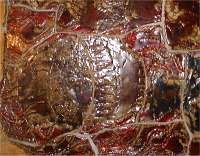
| 鈴木青々氏制作 陶壁A(注4) Pottery wall A(Note 4 ) Made by Mr. Seisei Suzuk |
加藤鈔氏制作 陶壁B(注4) Pottery wall B(Note4) Made by Mr. Shou Kato |
 |
 |
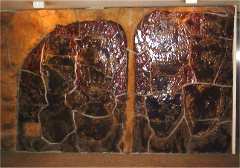
| 赤の発色部接写 (陶壁A) Close up for red color portion (Pottery wall A) |
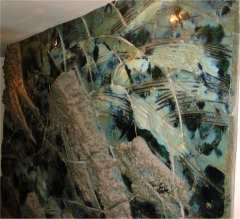
孔雀部接写 (陶壁B) Close up for peacock portion (Pottery wall B) |
 |
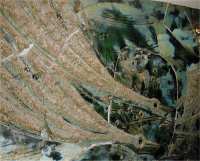 |
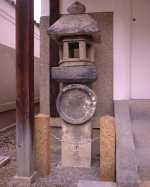
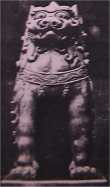
| 注 1 織部燈籠 (立て看板の説明から引用) 製作年 文化4年(1807年) 構造 陶器製 織部型 規模 170CM 製作者 加藤武右衛門春宇 織部燈籠の陶製は珍しく、やきもののまち瀬戸らしい作品であり、陶製燈籠としても 市内最古である。また、世に「切支丹燈籠」とも呼ばれている。 作者は江戸時代、 本業焼の名工である。 1 Oribe lantern (quoted from the explanation of standing signboard) Made in: 1807 Structure: Pottery; Oribe mold Size: 170CM Made by: Mr. Buuemon Shun-u Kato Oribe lantern made by pottery is rare, and is the works which embodys ceramic town, Seto suitably. This pottery lantern is the oldest in Seto, and called "Kirishitan- lantern" generally. The making person is master hand in Hongyou-ware in Edo Era (1603 - 1867). 2 狛犬 - 重要文化財 高さ51cm (神社の社務所の受付に貼ってあった新聞のスクラップと立て看板の説明を一部引用) 瀬戸の陶祖である加藤藤四朗が製作して奉納したと伝えられ、現在残っているのは 牡型の一体のみである。全体に淡茶色で透明な灰釉が施されており、一部破損など が認められるが、木彫などに見られる鋭さとは異なった力強さと、生きているかの ような威厳を感じさせる。 陶祖を祭神とする陶彦神社が深川神社境内にある。宋から帰国した藤四朗はここで、 野宿をし、夢枕に立った神の「辰巳の方角に良土がある」というお告げを聞いたと伝承 される。写真の狛犬は宝物殿に安置されている。実物は写真撮影禁止の為、この新聞 スクラップを撮影したもので代用した。写真の向かって右の足は、破損しており、実物 は木で修復されている。社務所に願い出れば、見学できる(有料200円)。 2 Guardian dog - important cultural property; 51 cm high (Quoted partially from a newspaper clipping put up on the reception desk of the shrine office and the explanation of standing signboard) The following story have been handed down orally: Mr. Tohirou Kato, pioneer or God of Seto Pottery made and dedicated 1 pair of guardian dogs. Of the guardian dogs, only male type one remaines. Although transparent ash glaze is given to the whole guardian dog in light brown and breakage etc. is seen in part, dignity as if it was alive is impressed with different forcibleness from the sharpness looked at by wood carving etc. TheSuehiko Shrine which makes the God of Seto Pottery an enshrined deity is located in the precincts of Fukagawa Shrine. Mr. Tohirou Kato ,who came back from China (Sou), bivouaced here, and heard the divine message of "Good china clay exists in Tatsumi's direction (south-east)" from a god who appeared to him in his dream. The guardian dog of a photograph is placed in the treasure house. Since the real one is photography-forbidden, the photo taken of the newspaper clipping is substituted. The leg on the right of a photograph is damaged, and the real one is restored by wood. When asking the shrine office, you can see it. (\200) 3 古瀬戸焼狛犬 加藤清之氏が10年程前に、狛犬製作の打診を受け、20体程作り、そのうち、手許 に残した狛犬で、多量の鉄分が混じった土に木灰の釉薬を施し、還元焼成されている。 3 Guardian dog of Kosetoware About 10 years ago, Mr. Kiyoyuki Kato was asked to make guardian dogs and made about 20 pcs., of which the one remained with him is shown in the photo. A glazing agent of wooden ash is applied to a china clay which includes large amount of iron, and the ash applied clay is fired in reduction. 4 陶壁 社務所に隣接して境内に瀬戸パークホテルがあり、ホテル内の陶壁。 このホテルは市内観光には便利で、清潔・近代的で霊験あらたかな感じでお奨めです。 (シングル6,300円/6,700円;ダブル7,500円等。朝食/和・洋定食 各800円; 駐車場(境内)20台 無料 TEL: 0561-85-3333) 陶壁Aは1973年鈴木青々氏制作で窯の中で陶器が焼かれている所を示している。 赤の発色は難しいとされているので、拡大写真も載せました。 陶壁Bは加藤鈔氏制作で孔雀をモチーフとしている。 孔雀がわかるように拡大写真も載せました。 4 Pottery wall Seto Park Hotel is located in the precincts adjoining the shrine office. In the lobby of this hotel, there are two pottery walls. The clean and modern hotel is convenient for Seto city sight-seeing, and is also producing wonder working-atmosphere. This hotel is recommendable. (\6,300 or 6,700/single, \7,500/double, etc.; breakfast \800/Japanese style or western style ; parking 20 cars free of charge) Pottery wal A made by Mr. Seisei Suzuki shows the picture where potteries are fired inside kilns. Close up for red color portion is also shown because the red color is said to be difficult to create in firing. Pottery wal B made by Mr. Shou Kato shows the picture where peacock is used as the motif. Close up for peacock portion is shown as catched by you. |